
Matthias Schaufler
Memoiren Mémoires
Exhibition April – May 2026
Exhibition Views
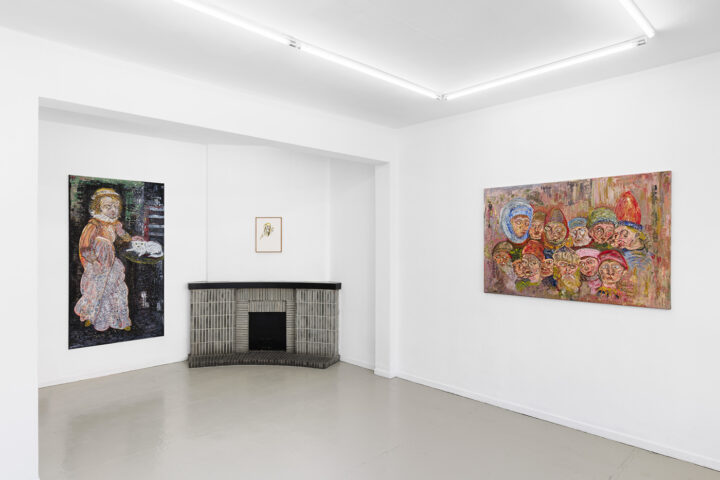
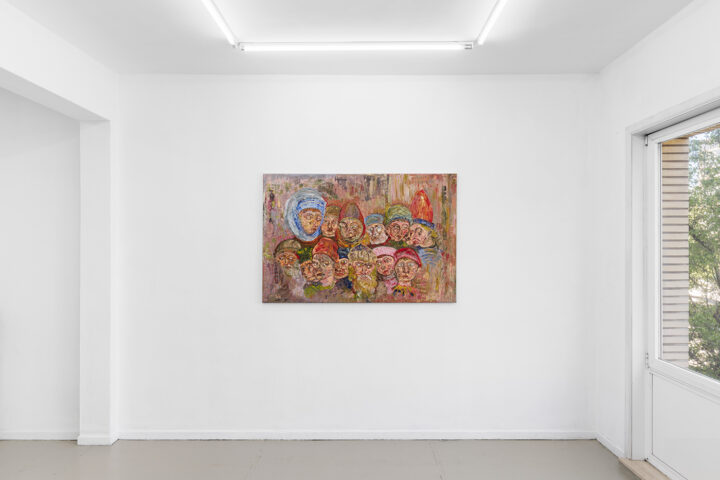
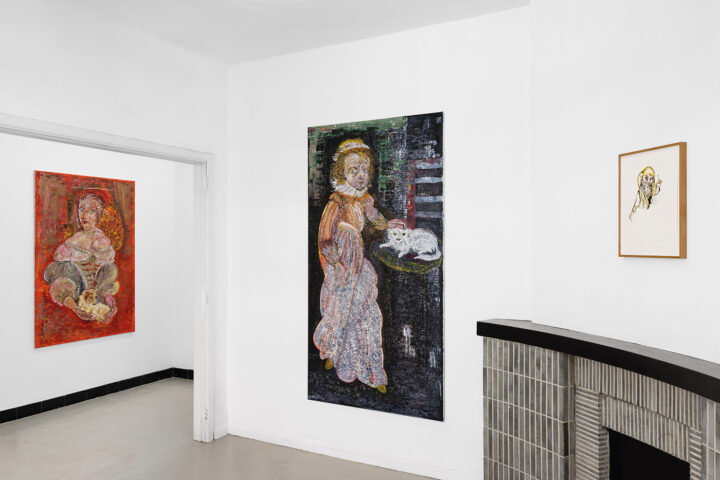
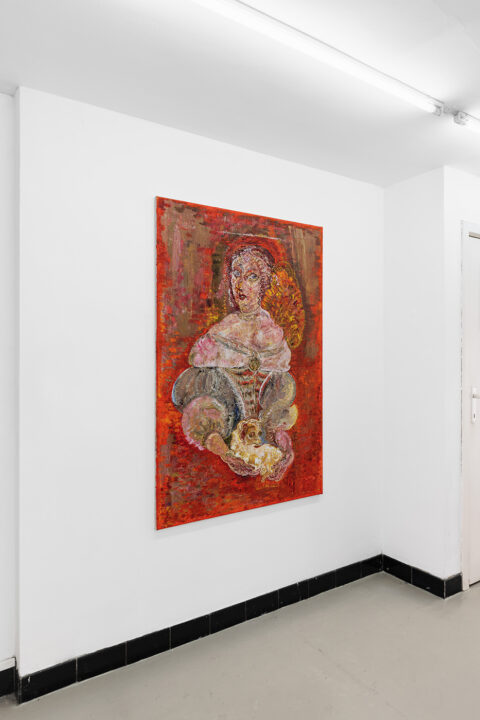
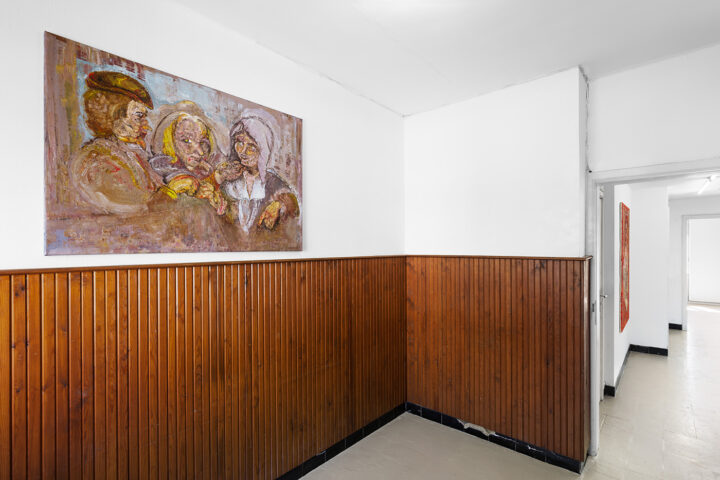
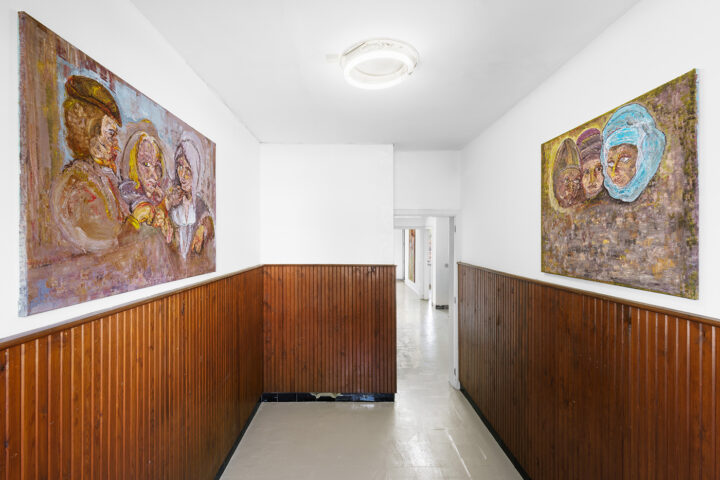
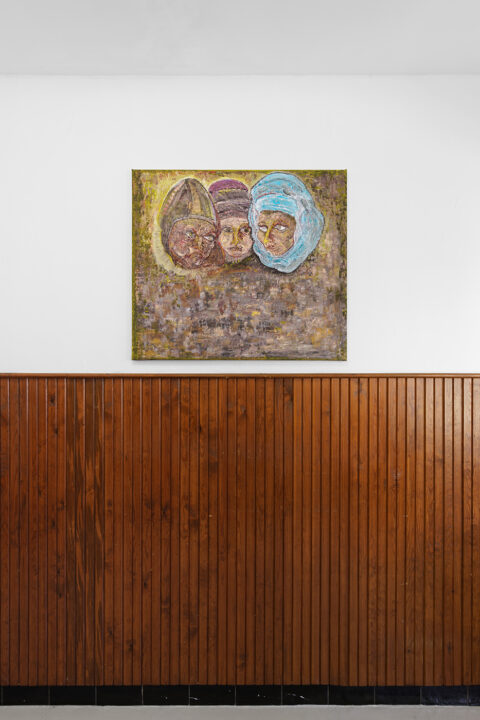
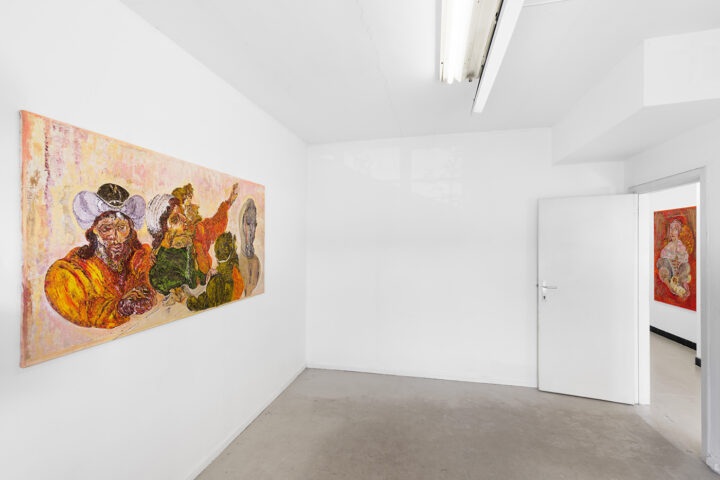
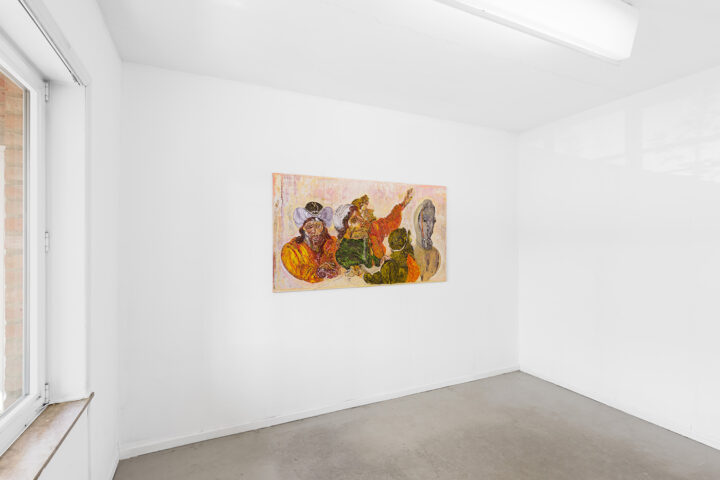
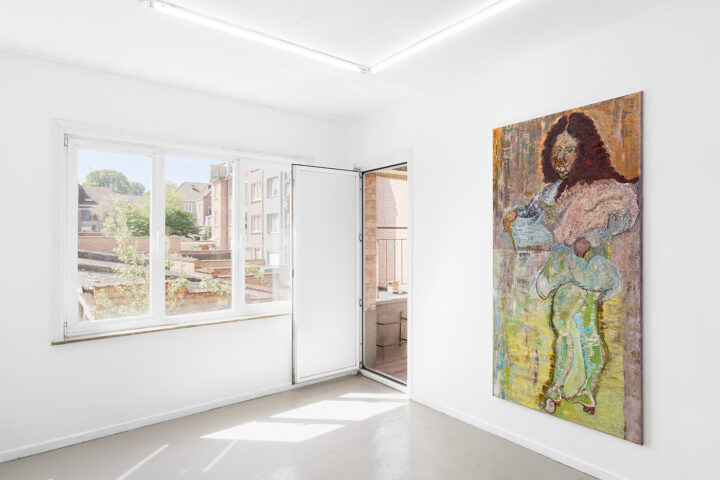
In the latest batch of paintings exhibited with JUBG in Brussels – on view from April 24, 2026 – Schaufler reveals the bedside table drawer where he keeps the keys to his memoirs. The works on display, in total seven oils on canvas and a drawing, contain previously unseen, and slightly disguised references to the artist‘s life, to the studies he carried over the past forty years, which gradually condensed into a corpus of surprising quality and unmistakable style. Among the medium-format works present in the exhibition, some have interacted with others rhythmically, since the compositional phases, providing sparks and flashes within the group. The lime green tights in Ludwig, 2026 trace the lines of a decadent eroticism that has existed in Schaufler‘s painting since 2006 – formally linked to his investigations on the figura, which still don’t seem to have reached the end of the day. An overflowing breast and the arched eyebrows in Louise with Rosie, 2026, evoke and conceal references to the utter gracefulness of the nieces of Jules Mazarine — and to the anti-Sadian imagery that affects them, since they were the most fortunate and free- spirited girls of eighteenth-century Europe. Aristocratic and triumphant heroines, to this date exiled from the short-sighted legacy of feminist narratives.
In Schaufler‘s recent painting, every gesture is isolated, every gaze fixed, every profile full of dignity. The construction of the image at times recalls Pesellino, who also framed his paintings in a total absence of drama, bringing a new, and truly classicist refinement to the Quattrocento Fiorentino. Schaufler‘s excursus is one of continuous shifts, a sequence of unpredictable departures and restarts that follow one another within a coherent methodological framework, one that is stable over time — and sometimes even tied to fixed devotional canons (enough to think of the two successive decades entirely dedicated to abstraction.) These movements intrinsic to his practice have always arisen from a densely populated experiential world, rich in emotional events, cognitive transitions, foundational and fundamental encounters, specific references that are never à la mode. All of this illustrates a way of going through life with a paintbrush in hand, whose modes and whereabouts the artist never intended to reveal even to his most faithful friends.
A hypogeal group of collectors has diligently documented, along the years, the movements in Schaufler‘s painting that are mostly characterized by an intimately reactive nature – the same nature that governs the psychic dynamics of memory itself – allowing his work to stay anchored in the present discourse that surrounds contemporary painting. Within the Belgian exhibition, an ink on paper depicts a painter with two brushes—likely a homage to the Bolognese Amerigo Aspertini, who lived between the 15th and 16th centuries. A complex and eclectic Renaissance painter whose style flagrantly anticipated Mannerism, Aspertini, like Schaufler, at a certain point in his life entered into portraiture and never emerged. He remained trapped in the memory of faces, in the study of expressions that he was able to swiftly capture with both hands. All his art was influenced by constant anatomical influences, by the Flemish paintings present in Bologna, by his travels to Rome, where he encountered ancient art, as well as by historically interesting contacts with certain men and women of his time. Aspertini‘s friendship with the anatomist and philosopher Alessandro Achillini – a charming intellectual of the Bolognese humanism – is immortalized in what can be defined as the most beautiful portrait of the Renaissance, now kept at the Uffizi (executed ad memoriam ante 1521, nine years after his friend‘s death.) Achillini sits with a small book clutched in his right hand, his disheveled head turned at three-quarters, he is smiling, dressed in sumptuous, worn out clothes. The facial features are painted in praise of his friend’s intelligence, who had studied faces like no other before. Together, the two had recognized a fascination in the grotesque, they found grace in deformations, in the most extreme and singular pronunciations, they seeked beauty in the transience of structure. Thus, Schaufler’s painting, succumbing only to the moods passed onto the pages of his notebook, celebrates the implicated memoirs of an art for art‘s sake.
Francesca Lacatena, Anacapri, April 2026